Monday, 14 November 2011

"Distrutto" Film Pitch:


I presented the film pitch, explaining to the class what our film idea was including other important factors while Scott flicked through the slides. Chris also helped out as support.

Film Pitch Presentation Slide 1:


Film Pitch Presentation Slide 2:


Film Pitch Presentation Slide 3:


Film Pitch Presentation Slide 4:


Film Pitch Presentation Slide 5:


Film Pitch Presentation Slide 6:


Film Pitch Presentation Slide 7:


Film Pitch Presentation Slide 8:


Film Pitch Presentation Slide 9:


Target Audience Research:


We have targetted our teaser trailer towards audiences above the age classification of 15 due to some language, violence and adult themes (which would be included in the actual film).


This product's demographics:


Male:Female ratio - 7:3
Age range - 15-24
British:International ratio: 6:4


This product's psychographics:


Interests in crime/espionage (films with noir-style particularly)
Particularly like rock and electronic music
Go to shops such as HMV, Topman and Primark.


We carried out a questionnaire to collect data on our target audience including their demographics and psychographics which would help us with our teaser trailer's production.


Our Questionnaire Results Slide 1:


Our Questionnaire Results Slide 2:


Our Questionnaire Results Slide 3:


Our Questionnaire Results Slide 4:


Our Questionnaire Results Slide 5:


Our Questionnaire Results Slide 6:


Our Questionnaire Results Slide 7:


Our Questionnaire Results Slide 8:


Our Questionnaire Results Slide 9:


Our Questionnaire Results Slide 10:

Friday, 4 November 2011

Ideologies & Theories:

Ideologies are usually present in media texts. These ideologies are communicated to audiences either implicitly or explicitly. For instance, newspapers and TV reports usually convey them across explicitly but occassionally convey them implicitly - it depends on the topic that is being broadcasted.


Ideologies are general ideas and ways of thinking. They are created from a person's ethic; their views of right and wrong. When an ideology is created, its importance is determined based on how many other people share, follow or support that ideology.


The more people agree, the more likely an ideology will become the dominant ideology. Dominant ideology is what the majority of people in society follow. However, some people disagree with the dominant ideology and turn against it. Usually they form what is called and opposing ideology, which challenges the dominant counterpart.


Both ideologies compete for dominance.


The following diagram illustrates the difference in values between competing ideologies:


Ideology is a big part of politics - both left wing and right wing have seperate ideals:


Left Wing Ideology:

Right Wing Ideology:


In narratives, there are two theorists who suggest that narratives are constructed in different ways. These are the conventional narrative theories:


Vladimir Propp's Theory of Narrative:


Propp suggested that characters took on the role of narrative 'spheres of action' or functions. From a study, he came up with seven different character types:


-THE HERO-


-THE VILLAIN-


-THE DONOR-


-THE HELPER-


-THE PRINCESS-


-THE DISPATCHER-


-THE FALSE HERO-


Characters may fulfill more than one sphere character type, for example the dispatcher may also be the helper.


Tzvetan Todorov's Theory of Narrative:


Todorov suggested that conventional narratives are constructed in five stages:


1. A STATE OF EQUILIBRIUM AT THE OUTSET


2. A DISRUPTION OF THE EQUILIBRIUM BY SOME ACTION


3. A RECOGNITION THAT THERE HAS BEEN A DISRUPTION


4. AN ATTEMPT TO REPAIR THE DISRUPTION


5. A REINSTATEMENT OF THE EQUILIBRIUM


This type of narrative structure is very similar to us and can be applied to many 'mainstream' film narratives.

Thursday, 13 October 2011

Thriller Textual Analysis:


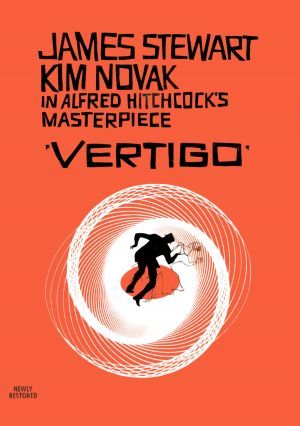
Vertigo (1958) Thriller Textual Analysis:


Mise en Scene:

Vertigo’s colours are vibrant and bright especially the blue of the ocean, the green of the cemetery and flowers surrounding the shop while lures the audience into the film. The lighting is ambient to make the visual appearence of the film feel natural and to relax us, with the settings shot mainly outdoors in open spaces. The main male character wears a smart black uniform with a matching black hat, symbolising to the audience that his male dominance, professional occupation and wealthy background makes him successful. Females are represented wearing white blouses and navy blue skirts to denote innocence, purity and beauty which aesthetically please the audience. The rooms surrounded by paintings, lamps and wood support the artistic modern interior designs that have been placed to evoke positive reaction from the audience. Shadows appear on the walls to raise suspense and forward the narrative.

Cinematography:

The trailer begins with a zooming in close up of a dictionary entry with the word “Vertigo” as a code to the audience and tells them what the film title means (possible giving hints towards what might happen in the film). A shot of two people hugging is shown with their figures in centre frame to emphasise their warm affection, easing the audience in scenes where suspense is not raised. A long shot with a female character watching a male character climb on a stool convinces the audience that they are spectators, watching from afar to see what happens next. Low angle shots have been used to reinforce the main characters psychological condition (fear of heights). Extreme long shots such as the shot of the San Francisco bridge shows off the scenery with characters wandering in deep thought. A low angle shot zooming out puts the audience at unease as the main character hangs off from a building.

Sound:

The sound begins with non-diegetic strings and orchestral sounds, quiet at first but introduces trumpets etc to raise suspense. The sound then returns to a quiet level as the voiceover narrates the film trailer. The narrator asks rhetoric questions to invite the audience and persuade them to listen to the story told by the characters exchanging diegetic sounds of dialogue. Near the climatic point of the trailer the instruments build pace to fix the audience’s attention to the actions happening on-screen which involves the main character leaning off from a building, inches away from his death. This near death experience is supported by a few seconds of loud strings and orchestral sounds that hold a note down to emphasise the thrilling sensation.

Editing/Special Effects:

The first editing technique is a swirly transition that goes into a black screen with swirling objects of different colours prior to a thin light orange text font with “VERTIGO” on it. This has been done to allure the audience into the trailer, makes them create expectations and ask questions. The text used to introduce names of the actors is the same but with a smaller font size with white colour. Further effects include a transition used include fades between shots to move the trailer forward smoothly to ease the viewers before the pace of the music rises. Another editing effect was a shot placed over another shot where a beautiful female character is caught on camera looking outside the window to find a male character looking around. The transitions of the text effects enter and exit in various ways including wipes and rotations to excite the audience further.

Friday, 7 October 2011

Directing Trademarks/Techniques:

Now that I looked at each of the thriller trailers and familiarised myself with the genre's forms and conventions I noew have a clear idea of the genre.


Our group was not ready to put our teaser trailer into development so we did additional research into directing trademarks/techniques. We felt that we needed to learn new styles of film-making to benefit our technical skills with using a camera. We also wanted to test the audience to see if they could identify these particular directing trademarks/techniques and relate our product to the directors we researched.


The first director we studied was Christopher Jonathan James Nolan, born in 1970 in London. He started his filming career when he was seven, using action figures and filming them with an 8mm camera. At University College London he begun making 16mm films at the college film society. His early works such as 'Tarantella' and 'Larceny' were presented.


His most notable works include:

1. THE DARK KNIGHT (1996) -

2. INCEPTION (2010) -

3. MEMENTO (2000) -

4. BATMAN BEGINS (2005) -


The second director we studied was David Andrew Leo Fincher, born in 1962 in Denver, Colorado. When he reached 18, he went to work for Korty Films in Mill Valley. From there he became a director, producer and an actor. He subsequently worked at ILM between 1981-1983 before leaving to direct TV commercials and music videos.

His most notable works include:

1. FIGHT CLUB (1999) -

2. SE7EN (1995) -

3. THE SOCIAL NETWORK (2010) - 

4. THE CURIOUS CASE OF BENJAMIN BUTTON (2008) -


The last director we studied was Alfred Hitchcock, born in 1899 in London. His interest in movies began around 1915 after working as an estimator for a cable company. He went on to become the most widely-known, influencial director in the history of the world of cinema. He produced work for over 50 years and his techiques are still used today.

His nickname was 'Hitch, the master of suspense'.

His most notable works include:

1. VERTIGO (1958) -

2. PSYCHO (1960) -
3. REAR WINDOW (1954) -

4. NORTH BY NORTHWEST (1959) -


Christopher Nolan uses the following directing trademarks:


Our group thought that having a non-linear timeline in the narrative would raise suspense and make our audience ask questions. Plus, it would make the production of our teaser trailer much easier (by not having to take shots in numerical order but instead be able to film random shots at random times when it suited our group). 

Endings with justified dishonesty is a factor we are considering. This may involve challenging a convention which will be elaborated in the evaluation questions for when we get onto them.

Our group is not thinking of having our main protganist with any particular kind of psychological disorder but we may consider having a an over-emotional main protaganist. We want his emotions to stand out to the audience so they can feel sympathy, relate to his character and fear for his/her life.

David Fincher uses the following directing trademarks:

Our group has decided that we will pay attention on shooting the faces and figures of mysterious antagonistic characters covered in shadow to mask their indentities and raise suspense to set up the atmosphere for the thrills our audience will recieve.

We are also considering on using single frame inserts with subordinating antagonistic characters walking towards the camera. This will thrill the audience with terrifying and menacing facial expressions of antagonistic characters.

Tracking shots have been taken into consideration. We mainly want to show the main protagonist running to build pace and lead this up to our teaser trailer's climatic point.

Alfred Hitchcock uses the following directing trademarks:

The "wrong man" or "mistaken identity" theme is an innocent man or woman mistaken for a criminal. Our group is planning on reversing this theme, making one of our characters pretend to play the innocent role when playing an evil role in reality.

Creating shadows on the walls is a code we may use at our disposal for making our audience ask questions. It will make our teaser trailer look impressive for taking after the work of Hitchcock. We at least want our audience to identify the allusions we have placed into our product to help them identify it as a thriller.

It is only circustantial as to whether we will cast any actresses who is blonde - this is not one of our intentions because we want to cast people who have some experience at acting. As long as they are acceptable at performing their roles, they can join the cast.

Friday, 23 September 2011

Codes & Conventions:

I suspect that the following are the forms and conventions of thriller genre. These forms and conventions of which are clearly shown on-camera for the viewer to identify:

 1 - Guns -


2 - Cars/vehicles -


Guns hold the ability to instantly kill off characters and raise suspense. Cars/vehciles are also potentially deathly when in the hands of dangerous drivers. These make the audience hope that the characters they have identified themselves with do not die.

3 - Suits/uniforms -


4 - Photographic evidence -


Photographic images and mirrors raise suspense even further because they reveal the hidden intentions and dark truths of specific characters to the audience; dramatic irony. The antagonists are most often the ones who's secrets are revealed.

5 - Mirrors -


6 - Shadow/lighting -


Suits/uniforms and shadows mask these hidden truths and intentions to surpise the audience at the best times. It keeps the antagonistic characters from revealing their true evil identities to society and exposing themselves wide out in the open.

Members of our group can openly discuss whether we want to follow or challenge particular codes and conventions and say why.

However, choosing whether to follow or challenge these forms and conventions depends on what the expectiations of our target audience will be before viewing the film.

It is both important for our audience to identify our product as a thriller and to experiment with new ideas to see if they thrill our audience, which could involve challenging these forms and conventions.

Thursday, 15 September 2011

Thriller Trailer Investigation:

After we chose the top 10 thriller titles of all time, according to the IMDB link, we searched the trailers for them on YouTube and began to deconstruct them. http://www.imdb.com/chart/thriller

Although there is a difference between trailers and teaser trailers in terms of length, they both share the same purpose as advertising tools. We could not find any teaser trailers based on these films but because normal trailers are not a lot diffferent to teasers, I did not see this as a particularly big problem.

Throughout my research I focused particularly on any patterns that I could identify in each trailer. From this I would be able to learn the forms and conventions of thrillers especially how they are used to thrill the audience.

 1 - Pulp Fiction (1994) -


2 - The Dark Knight (2008) -


3 - Inception (2010) -


4 - Goodfellas (1990) -


5 - Rear Window (1954) -


6 - Psycho (1960) -


7 - The Usual Suspects (1995) -


 8 - Leon (1994) -


9- Vertigo (1958) -


10 - The Lives of Others (2006) -


We decided to keep the trailer short, just under one minute in length, where we would use face-paced sound and editing. It just depends on the genre. The purpose of a thriller teaser trailer is to thrill the audience and make them want to see the film for themselves.

These trailers have given me a clear understanding of what thriller trailers involve. It has also given me an insight into how people decode and subvert these trailers in terms of genre, codes, conventions, iconography, context and narrative.

Audiences will be expecting thrillers to give them thrilling sensations. It is the purpose of the thriller genre to do so. Watching sample thriller trailers has been beneficial to our group for inspiring us to challenge and subvert the forms and conventions to create new inventive ways of thrilling our target audience.